Gigantic vertebrae provide new insights into prehistoric giant shark
The largest shark vertebrae researchers have ever seen have resurfaced after being missing for more than 40 years. They are now shedding new light on the legendary Megalodon.

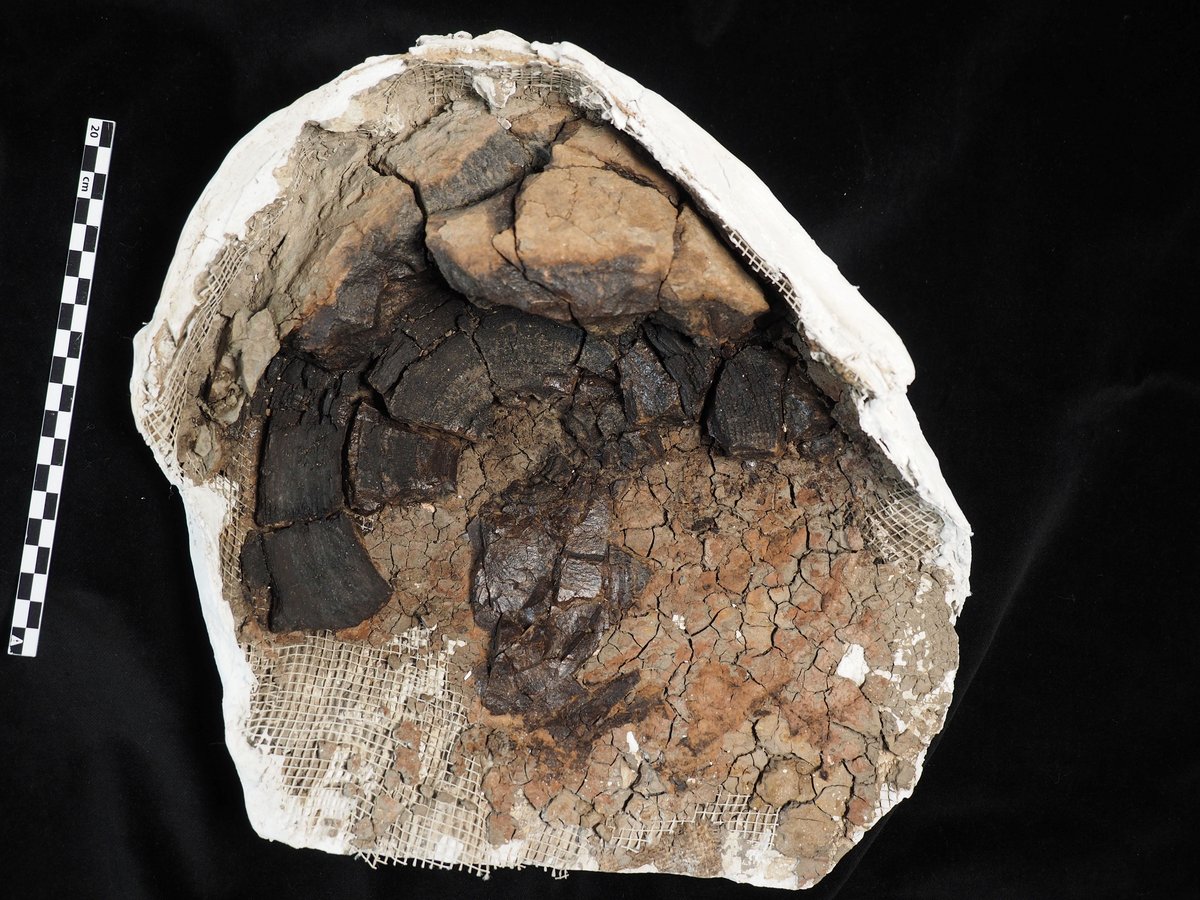
Hidden away in boxes since the 1980s, a rediscovered set of gigantic vertebrae from the extinct Megalodon shark is providing new knowledge about the shark’s biology and way of life.
A study of the vertebrae has just been published in the international journal Palaeontologia Electronica.
The shark vertebrae were originally found in Gram Clay Pit during an excavation in 1978. Among several fossils was a 10.8-million-year-old set of vertebrae from Otodus megalodon - the largest shark ever known, which lived across almost the entire globe around 15 to 3.6 million years ago. The find was briefly mentioned in publications in the early 1980s and was stored at the Geological Museum in Copenhagen - now part of the Natural History Museum of Denmark.
After publication, the vertebrae were damaged during a move and were long considered lost. Only photographic documentation in the scientific literature remained. But a few years ago, an observant museum employee happened to rediscover the missing Megalodon vertebrae in three wooden crates in the collection.

The vertebrae have now been scanned in Aarhus University’s micro-CT scanner, one of the few in Denmark capable of scanning large objects at very high resolution.
The new research was carried out by an international research team including Mette Elstrup and Trine Sørensen from Museum Sønderjylland and Henrik Lauridsen from Aarhus University, in collaboration with colleagues from the United States and Australia.
A rare find
Our knowledge of Megalodon’s size and way of life is primarily based on fossil teeth.
“Sharks continuously shed their teeth, and Megalodon probably had between 20,000 and 40,000 teeth during its lifetime,” says Mette Elstrup, head of Section of Natural History at Museum Sønderjylland and one of the authors of the article.
By contrast, shark skeletons are made of cartilage, which normally breaks down much faster. Fossil vertebrae from Megalodon are therefore extremely rare. But the special preservation conditions in Gram Clay Pit have made it possible for the shark vertebrae to survive for millions of years.
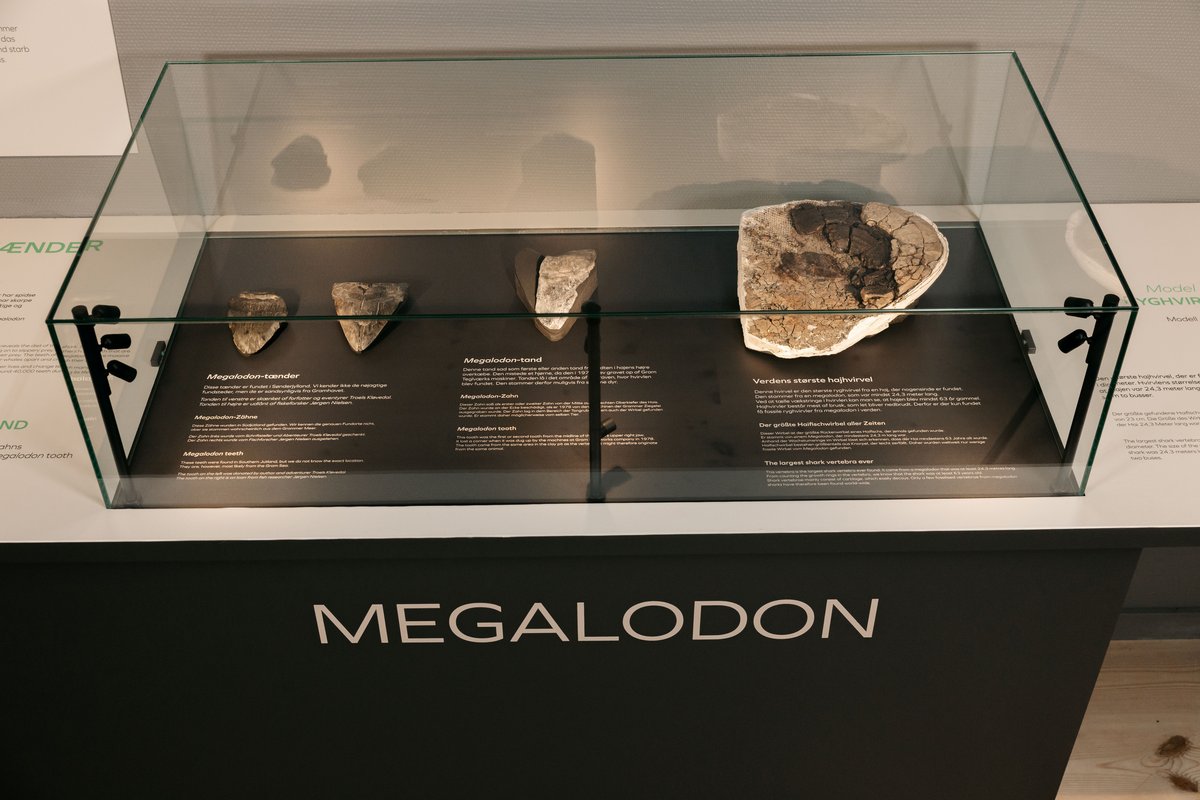
“There are only a handful of Megalodon vertebrae worldwide. That is why it is fantastic that we have now been able to scan the largest vertebra ever found and investigate what it can tell us,” says Mette Elstrup.
Scans reveal the shark’s age
The analyses show that the shark lived to be at least 64 years old. The researchers estimate that it may theoretically have had a maximum lifespan of up to 96 years.
The scanning, however, was technically demanding.
“The fossils are large, dense and surrounded by hard clay. It required powerful X-rays to penetrate the material. Along the way, we burned out both a cable and parts of the X-ray equipment, but we obtained very good images,” says Henrik Lauridsen, associate professor at Aarhus University, who carried out the scanning.
The result was an enormous dataset, which has subsequently been analyzed.
The scans have provided researchers with detailed cross-sectional images in which the growth lines in the vertebrae can be clearly seen — much like tree rings. The growth lines can show, among other things, how the animal grew throughout its life and provide a more precise basis for calculating the shark’s length.
Ate another shark for lunch
Megalodon is well known from popular culture, including films such as “The Meg”, but no complete skeletons have ever been found of the shark, which is the largest known shark predator of all time. The new analyses confirm that Megalodon could reach a length of up to 24.3 metres and weigh around 94 tonnes.
“Although our growth model suggests that Megalodon could theoretically have been slightly larger, the length of 24.3 metres is currently the largest scientifically supported size,” says Professor Kenshu Shimada from DePaul University in Chicago, lead author of the study.
The researchers also made a remarkable discovery in the sediment surrounding the vertebrae. There, they found remains of gills and scales from another shark species, a basking shark. This is the first time fossil stomach contents can be directly linked to Megalodon as evidence of what it ate. Until now, knowledge of the shark’s diet has mainly been based on bite marks in fossil bones from other marine animals.
A key to ecosystems of the past
The find from Gram Clay Pit is the Megalodon specimen located closest to one of the poles anywhere in the world. This supports theories that the giant shark also lived in cooler marine areas.
New knowledge about the species’ size, age and diet is important for understanding marine ecosystems of the past.
The Megalodon vertebra can be seen at the museum at Gram Clay Pit — Museum Sønderjylland — where visitors can also go fossil hunting themselves for shark teeth, fossilized whale bones and other prehistoric marine animals in the clay pit.
About the research findings
• The study is basic research.
• The partners are Museum Sønderjylland, Aarhus University, DePaul University in Chicago and the Western Australian Museum.
• Read more in the scientific article.
Contact
Head of Section Mette Elstrup
Museum Sønderjylland
Phone: +45 25 88 43 69
Email: mese@msj.dk
Associate Professor Henrik Lauridsen
Aarhus University, Department of Clinical Medicine
Phone: +45 61 72 21 06
Email: henrik@clin.au.dk